
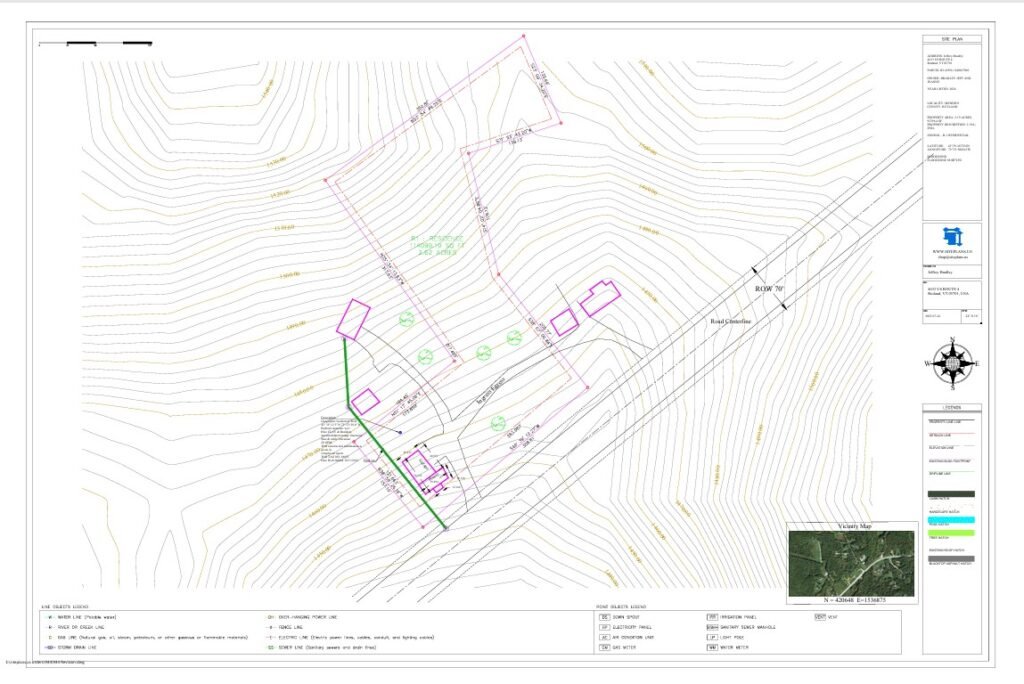
The pool contractor has a slot opening up in six weeks. The permit is the only thing standing between you and breaking ground. Then the correction letter arrives: "Barrier notation absent. Equipment pad location not shown. Setback to rear property line measured incorrectly."
Pool permits get returned for corrections more consistently than almost any other residential project type — not because pools are complicated to permit, but because the site plan checklist for a pool has more line items than a garage or shed, and most generic drafting services treat it the same way they treat every other residential structure.
They don’t.
A pool sits differently on a parcel than a garage does. The setback standard may differ from your primary structure and from your accessory structures. The equipment pad needs a specific location shown relative to the pool and the property line. The barrier — fence, wall, or other enclosure — needs to be shown with gate locations and latch hardware noted. In flood-mapped areas, the pool shell elevation may need to be verified. In cities with active tree ordinances, the disturbance footprint around the pool deck triggers protection requirements.
None of that appears on a template plan. All of it appears on a correction letter when it’s missing.
We draft pool site plans to the checklist your city’s building department actually uses. $89 for standard residential pools. Delivered within 24 hours. Free revisions if anything comes back.
What Pool Permit Reviewers Check That Generic Plans Miss
Pool permits route through more review categories than most homeowners expect. In cities with concurrent review systems, a pool application may touch Building, Zoning, Health, and sometimes Stormwater — all running simultaneously. A missing barrier notation doesn’t just delay Building review. It holds the Health review that’s running alongside it.
Here’s what reviewers check on pool permit site plans — and what generates correction comments when it’s absent:
Barrier compliance. Every US jurisdiction with a residential pool ordinance requires the pool to be enclosed by a barrier — fence, wall, or combination — that meets specific height and access standards. The International Residential Code sets a floor of 48 inches with self-closing, self-latching gates. Many cities go higher: 60 inches, with additional latch placement requirements. The barrier must appear on the site plan with dimensions. Gate locations must be shown. In some jurisdictions, the latch hardware specification needs to appear as a note on the plan face. This is the single most commonly missing element on pool permit applications.
Equipment pad location. The pool pump, filter, and heater assembly sits on a concrete pad adjacent to the pool. That pad has its own setback requirements in many jurisdictions — typically 3 to 5 feet from the property line, sometimes more. A site plan that shows the pool shell but omits the equipment pad location produces a comment before structural review opens.
Setback from all property lines. Pool setbacks are often different from primary structure setbacks and from accessory structure setbacks. In many jurisdictions, the pool water’s edge must maintain a minimum distance from every property line — typically 5 feet rear and side, though this varies significantly. Some cities measure to the pool coping. Some measure to the water’s edge. Some measure to the equipment pad. We verify which standard applies to your zoning district before the plan is drafted.
Drainage direction. Where does the water go when the pool is drained or when heavy rain overtops the deck? Several cities require drainage direction to be shown on the pool site plan, particularly in stormwater-sensitive jurisdictions. Plans submitted without it in cities that require it come back from the Stormwater reviewer, not Building — which means the Building review clock restarts from zero.
Setback from the primary structure. Most jurisdictions require a minimum distance between the pool shell and the house foundation — typically 5 to 10 feet — to protect the foundation from water infiltration and soil movement. This setback appears on the plan as a labeled dimension.
Utility line clearance. Underground utilities — gas, electric, water, sewer — require clearance distances from pool excavation. Above-ground utilities require overhead clearance. A pool proposed directly above an underground gas line or within the overhead electric setback produces a comment from the utilities reviewer. We check utility locations relative to the proposed pool footprint before finalizing the plan.
What Pool Permit Correction Letters Actually Say
“Barrier enclosure not shown on site plan. Pool barrier minimum 48 inches required per IRC Section R326. Gate locations, self-latching hardware notation, and barrier dimensions required. Resubmit.”
Barrier notation is the most commonly missing element on pool permit applications. We show the full enclosure with dimensions, gate locations, and hardware notes on every pool plan.
“Pool equipment pad location not shown. Equipment setback from property line required. Resubmit with equipment pad location and setback dimension.”
We locate the equipment pad on every pool plan and show the setback dimension from the nearest property line.
“Setback from rear property line shown at 3 feet. Minimum pool setback in this zoning district is 5 feet to water’s edge. Resubmit with corrected dimension or variance application.”
We pull the pool-specific setback standard for your zoning district — not the general residential setback or the accessory structure standard — before placing the pool footprint on the plan.
“Drainage plan absent. Properties within 500 feet of regulated waterway required to show pool drainage direction and discharge point. Resubmit with drainage notation.”
We check stormwater sensitivity for every parcel and add drainage direction notation where required.
“Overhead electric line clearance not verified. Proposed pool location within 10 feet of overhead service entrance. Utility clearance required before permit issuance.”
We check overhead utility locations relative to the proposed pool footprint. A pool that can’t be built where it’s shown on the plan wastes everyone’s time.
“Tree protection plan absent. Proposed pool deck disturbance area within drip line of 18-inch heritage oak. Tree protection barriers required before grading begins.”
In cities with active tree ordinances, pool deck disturbance areas trigger the same tree protection requirements as any other ground disturbance. We identify protected trees and show protection zones when applicable.
What Every Pool Site Plan We Deliver Includes
No two cities have identical ADU checklists. But every approvable ADU site plan contains a core set of elements that reviewers check across all jurisdictions:
| Plan Element | Why Reviewers Flag It When Missing |
|---|---|
| Pool shell footprint with dimensions | Scaled accurately; water’s edge dimensions shown for setback measurement |
| Pool setbacks from all property lines | Pool-specific standard verified — not primary structure or accessory structure setback |
| Setback from primary structure foundation | Foundation protection distance required in most jurisdictions |
| Barrier enclosure with dimensions | Height, material type, gate locations, and latch hardware notation |
| Equipment pad location and setback | Pad dimensions, setback from nearest property line, equipment type noted |
| Deck area footprint | Deck square footage included in lot coverage calculation |
| Lot coverage calculation — all hardscape | Pool shell + deck + house + driveway + walkways + existing structures |
| Drainage direction notation | Required in stormwater-sensitive jurisdictions and near regulated waterways |
| Utility line clearance notation | Underground and overhead utilities checked relative to pool footprint |
| Flood zone notation | FEMA designation and panel number shown for flood-mapped parcels |
| Tree protection zones | Protected trees within disturbance area located with dripline notation |
| North arrow, engineering scale, legal description | Missing any produces rejection before substantive review |
Pool Permits Across Different Cities — What Changes
Sacramento, CA — Pool setback typically 5 feet from property lines. Equipment pad setback from property line required. Tree ordinance (Chapter 12.32) applies to pool deck disturbance areas — protected oaks must be located with dripline notation. Impervious surface calculation must include pool deck square footage.
Jacksonville, FL — BFE and finished floor elevation required on plans for parcels in AE flood zones — pool shell elevation may need verification relative to BFE. Grand tree (24″+ DBH) location required if within disturbance area. Lot coverage includes pool shell and deck area.
Raleigh, NC — Impervious surface line items required — pool deck listed separately from house, driveway, and other hardscape. Neuse River riparian buffer applies if USGS blueline stream on parcel. Pre-May 2001 lot framework may apply to stormwater calculation.
Austin, TX — Impervious cover limit tied to watershed zone — pool deck can push a lot over the impervious cap in certain watersheds. Heritage tree (19″+ DBH) review required if pool excavation or deck disturbance affects root zone. Setback from property lines per zoning district.
Dallas, TX — Pool setback from property lines varies by district. Lot coverage and impervious tracked separately. Floodplain notation required near Trinity River tributaries. Equipment pad setback required.
Phoenix, AZ — Pool barrier requirements enforced strictly — 5-foot fence minimum with specific gate latch standards. Equipment pad setback from property line required. No flood zone issues for most inland parcels but lot coverage still tracked.
Nashville, TN — Pool setback requirements vary by zoning district. Barrier enclosure required per IRC standards. Equipment pad location required on plan. Stormwater drainage direction shown for larger pool and deck installations.
In-Ground vs. Above-Ground Pools — What Changes on the Plan
In-ground pool: Full site plan required in virtually every jurisdiction. Shell footprint, all setbacks, barrier enclosure, equipment pad, deck area, lot coverage, drainage direction, utility clearances. The permit process is the same as any permanent structure.
Above-ground pool: Requirements vary more than most homeowners expect. Some jurisdictions treat above-ground pools over a certain size — typically 24 inches deep or 5,000 gallons — as permanent structures requiring the same site plan as in-ground pools. Others have a simplified permit track. Barrier requirements typically still apply regardless of pool type. We verify which track your city uses before drafting.
Spa or hot tub: Standalone spas and hot tubs attached to pools each have their own permit requirements. A spa connected to the pool system is typically permitted with the pool. A standalone spa may require a separate permit. Site plan requirements are usually simpler — footprint, setback from property lines, equipment location — but still required for permanent installations.
Pricing
| Plan | Price | Best For |
|---|---|---|
| Basic – $89 | Standard in-ground pool on straightforward residential lot | Pool shell, setbacks, barrier notation, equipment pad, deck footprint, lot coverage, north arrow, scale |
| Enhanced – $149 | Pool with flood exposure, tree coverage, or stormwater complexity | Adds FEMA flood data, tree protection notation, drainage direction, utility clearance notation, riparian buffer if applicable |
| Premium – $249+ | Complex lots, pools near regulated waterways, pool-plus-ADU projects | Full compliance verification, grading notes, historic overlay if applicable, combined lot coverage for multi-structure projects |
✅ Free revisions on any correction comments
✅ 24-hour turnaround on most pool permit projects
✅ All 50 states — jurisdiction-specific research on every order
✅ No survey required for the majority of pool permits
FAQs — Pool Permit Site Plans
It depends on your jurisdiction and the pool’s size. Most US cities require a permit — and therefore a site plan — for above-ground pools exceeding 24 inches in depth or a certain water volume, typically 5,000 gallons. Barrier requirements almost always apply regardless of pool type. We verify your city’s threshold before drafting so you’re not paying for a plan you don’t need or skipping one you do.
Pool contractors often pull the permit on the homeowner’s behalf, but they typically don’t draft the site plan — that’s a separate document they either outsource or expect the homeowner to provide. Confirm with your contractor whether the site plan is included in their service. If it’s not, we provide it in 24 hours at a fixed price.
The IRC minimum is 48 inches, but many cities exceed that. Common local standards range from 48 to 72 inches. Some jurisdictions also specify maximum picket spacing, gate latch placement height, and whether the barrier must be freestanding or can use the house wall as one side. We verify the barrier standard for your city before the plan is drafted and note it on the plan face.
Yes. Send us the correction letter and the plan that was returned. We verify the correct pool-specific setback standard for your zoning district — which is often different from the primary structure setback and the accessory structure setback — recalculate the dimension, and revise the plan. If the pool footprint as designed can’t meet the setback, we’ll tell you before you resubmit.
The deck area around the pool — concrete, pavers, or other hardscape — counts toward your lot’s impervious surface total just like the driveway and house footprint do. A large pool deck on a lot that’s already near its coverage maximum can push the project over the limit. We calculate existing coverage plus pool shell plus deck area and verify the total against your zoning district’s maximum before the plan is finalized.
Other Project Types We Deliver to USA Homeowners
ADU Site Plans | Garage Site Plans | Home Addition Site Plans | Deck Site Plans | Shed Site Plans | Fence Site Plans
City pages with documented local pool permit requirements:
Sacramento | Jacksonville | Raleigh | Austin | Dallas | Fort Worth
Pool Site Plan for Permits We've Worked Across These Cities
ADU rules are local. Every order includes jurisdiction-specific research — not a static template