
Colorado Springs Commercial Site Plan Approval Case Study: Managing Multiple Revision Cycles for a Warehouse Development
A commercial warehouse development in Colorado Springs entered multiple review cycles after the city issued a series of plan review comments affecting drainage design, culvert specifications, grading, utility coordination, access requirements, addressing conventions, and site layout.
Several comments required revisions beyond the applicant’s original design assumptions, including modifications to culvert design criteria, contour intervals, utility visibility requirements, stormwater management provisions, parking layout, and power line clearance requirements.
SitePlans.us coordinated the revisions, updated the engineering exhibits, incorporated city comments, and prepared a revised permit package that ultimately satisfied review requirements and moved the project forward.
Delivered Project Overview
| Item | Details |
|---|---|
| Project Type | Commercial Warehouse Development |
| Location | Santa Fe Ave, Colorado Springs, Colorado |
| Permit Type | Commercial Site Development Review |
| Challenge | Multiple review cycles and evolving city comments |
| Primary Issues | Drainage, utilities, grading, access, culvert design |
| Result | Revised plans accepted after comment resolution |
Initial Review Comments Received
During review, the city identified several items requiring modification before approval could proceed.
Drainage Structure Revisions
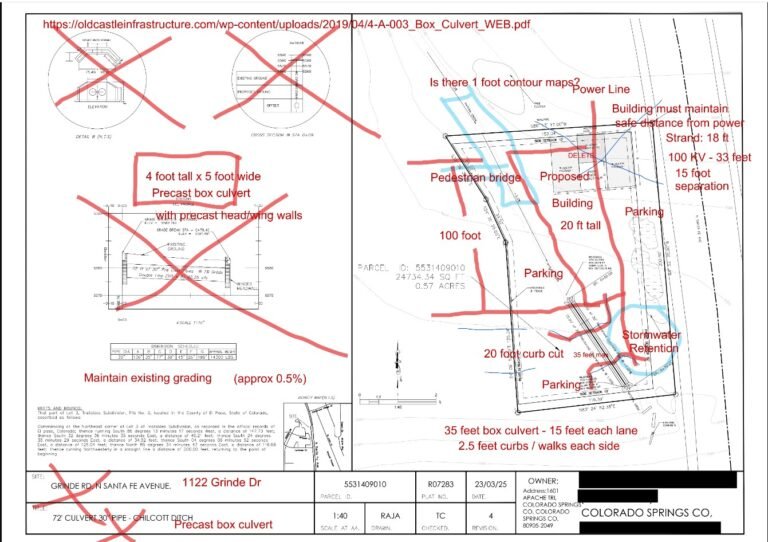
The original submittal referenced a 72-foot culvert utilizing a 30-inch pipe configuration.
Review comments requested:
- Removal of the original sizing reference
- Conversion to a precast box culvert design
- Updated design criteria consistent with city requirements
Grading Requirements
The submitted grading plan used:
- Existing grade assumptions near 1%
- Five-foot contour intervals
Review comments required:
- Revision of grading assumptions
- One-foot contour intervals for improved site evaluation
- Updated grading representation around drainage improvements
Utility Coordination
The city requested additional utility information that was not visible within available county easement mapping.
Required revisions included:
- Identification of overhead power infrastructure
- Utility coordination near the proposed building envelope
- Verification of utility conflicts affecting development potential
Access and Transportation Requirements
Review comments requested:
- Proposed curb cut revisions
- Parking area updates
- Improved access circulation
Addressing and Plan Formatting
Additional comments required:
- Address revisions to match city addressing standards
- Updated project naming conventions
- Removal of sections and profiles from the submitted package
Power Line Clearance Requirements
The city required the proposed warehouse location to demonstrate compliance with utility separation requirements near overhead electrical infrastructure.The building footprint was revised to maintain appropriate clearances from nearby power facilities.
How SitePlans.us Responded
Rather than addressing comments individually, the entire site package was re-evaluated to ensure consistency between grading, drainage, utilities, easements, access, and building placement.
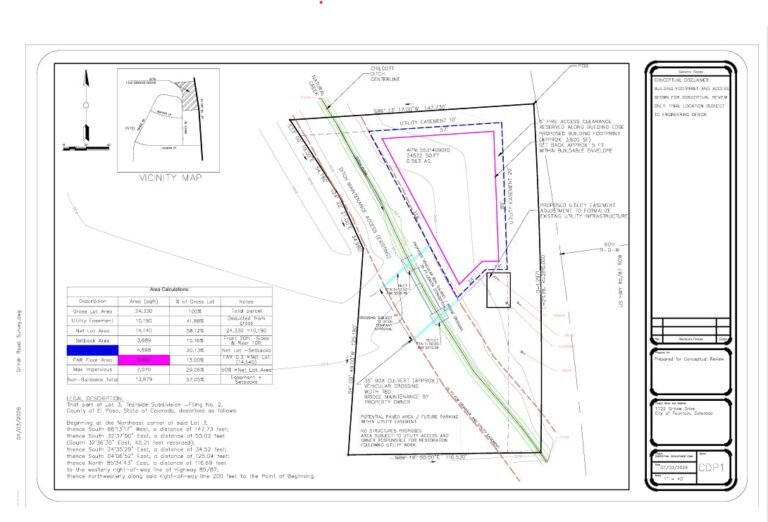
Easement Verification
The team reviewed:
- Historical surveys
- Legal descriptions
- Recorded property information
- Existing easement documentation
This process helped verify accurate property boundaries before revisions were incorporated.
Drainage and Culvert Redesign
The revised package included:
- Updated box culvert configuration
- Revised drainage channel layout
- Grading updates based on city comments
- One-foot contour intervals throughout affected areas
Utility Mapping Improvements
The revised plans documented:
- Existing overhead power lines
- Existing valves
- Existing hydrants
- Utility corridors affecting development
Additional utility easements were shown around the proposed building footprint where necessary.
Development Envelope Refinement
The warehouse footprint was adjusted to:
- Respect utility clearance requirements
- Accommodate access improvements
- Coordinate with revised easement locations
- Maintain buildable area constraints
Easement Strategy
Two separate easement areas were incorporated:
- Drainage and maintenance access easement
- Development setback and buildable zone easement
These revisions improved long-term site accessibility and compliance with review comments.
Outcome
After incorporating all review comments and updating the site package, the revised submission was accepted.
Final approved plans included:
- Revised drainage design
- Updated culvert configuration
- Utility coordination improvements
- Easement adjustments
- Parking revisions
- Building envelope modifications
- Updated grading exhibits
- City-compliant addressing standards
The project moved beyond review without requiring another major redesign phase.
Lessons From This Colorado Springs Permit Review
Commercial permit reviews often evolve throughout the approval process.
In many jurisdictions, additional review comments emerge as reviewers evaluate drainage, utilities, access, grading, and development constraints together rather than independently.
Successful permit approvals typically depend on:
- Accurate boundary verification
- Clear utility coordination
- Consistent grading information
- Reviewer-oriented plan presentation
- Rapid incorporation of review comments
Why This Matters For Commercial Developers
A review comment is rarely about a single redline.Most comments reveal an underlying compliance concern involving access, drainage, utilities, or site functionality.
Addressing those concerns comprehensively often shortens future review cycles and improves approval outcomes.
SitePlans.us prepares permit-focused site plans for commercial and residential developments throughout the United States.
Helpful Colorado Springs Resources
Colorado Springs Development Review Process
Review official development standards, engineering requirements, and permitting guidance through the city:
- Colorado Springs Planning & Development Services
- Colorado Springs Engineering Criteria Manual
- Colorado Springs Stormwater Design Manual
These resources provide the baseline requirements reviewers use during commercial development review.
Understanding Easements Before Development
Easements frequently affect:
- Building placement
- Utility routing
- Drainage facilities
- Future expansion opportunities
Reviewing recorded easements early often prevents expensive redesigns later in the process.
Related SitePlans.us Plans
FAQ
Commercial developments typically involve review by multiple departments including planning, engineering, drainage, utilities, transportation, and addressing authorities. Additional comments often appear as coordination issues are identified.
Smaller contour intervals provide greater grading detail and help reviewers evaluate drainage patterns, slopes, and stormwater impacts more accurately.
Yes. Additional utility coordination requests frequently occur when reviewers identify infrastructure conflicts or safety clearance concerns.
The property boundary, legal description, recorded easements, surveys, and title information should be cross-checked before final revisions are submitted.
Commercial developments frequently undergo drainage evaluation to ensure stormwater management, access, and infrastructure impacts meet local development requirements.