
$89. Tomorrow. Free revisions if corrections come back.
That’s the conversation nobody wants to have with their real estate agent.
An unpermitted deck — even a beautifully built one, even one that’s been there for twelve years — shows up on a home inspection report as an unpermitted structure. Title companies flag it. Buyers use it as a negotiating lever. Lenders sometimes won’t close until it’s resolved. And resolving it after the fact means pulling a retroactive permit, which requires a site plan, an inspection of the as-built structure, and sometimes demolition and reconstruction if the deck doesn’t meet current setback requirements.
The permit you skipped in 2019 costs more to fix in 2026 than it would have cost to pull it correctly the first time.
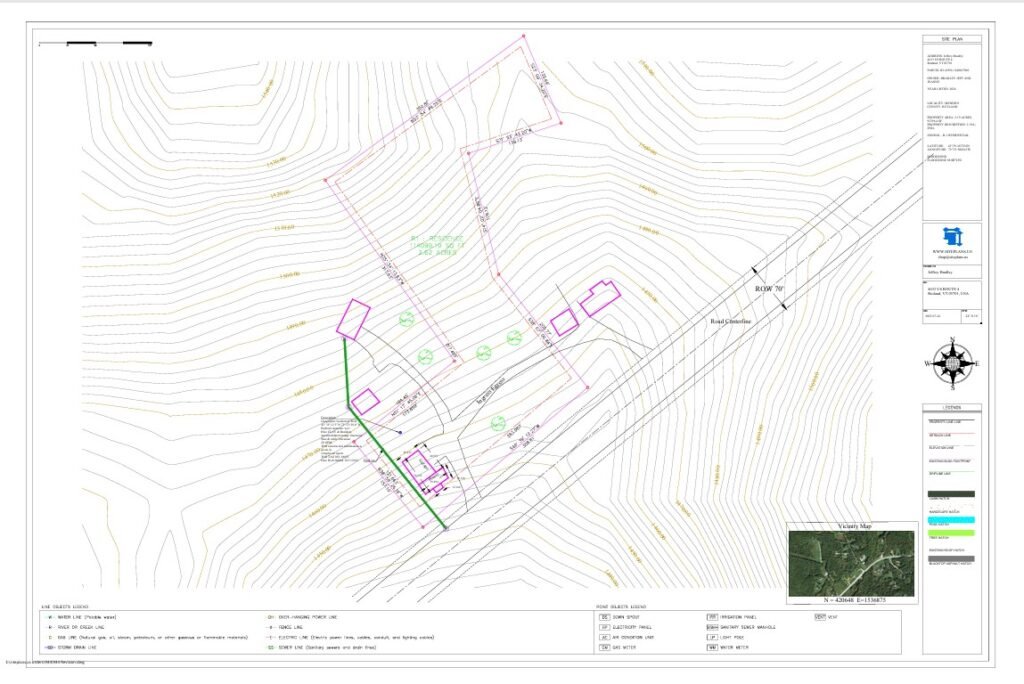
If you’re building a deck or patio now — or if you’re trying to retroactively permit one — a site plan is the document that starts the process. We draft it in 24 hours, built to your city’s current submittal requirements.
Why Deck and Patio Permits Are Different From What Most Homeowners Expect
Decks and patios look like outdoor furniture from a zoning perspective. They’re not. From the moment a deck is attached to a house structure, most building departments treat it as an extension of the primary building — with all the setback, lot coverage, and structural review implications that brings.
An unattached patio — pavers set on compacted gravel with no permanent foundation — may not require a permit in many jurisdictions. But a concrete patio with a poured foundation does. A freestanding deck over 30 inches above grade does. A covered patio or pergola attached to the house almost always does.
The site plan requirement follows the permit requirement. If the project needs a permit, it needs a site plan.
What catches homeowners off guard on deck and patio permits specifically:
Impervious surface is the primary trigger in many cities. A deck built on posts doesn’t add much impervious coverage — rainwater still hits the ground below. A concrete patio is 100% impervious. In cities with lot coverage maximums tied to stormwater management, a large concrete patio on a lot already near its impervious limit requires the math to be shown before the permit is approved. Plans submitted without the impervious surface calculation come back from the stormwater reviewer, not the building reviewer — which in concurrent-review cities means building review waits too.
Attached decks trigger setback review for the entire primary structure. Because an attached deck becomes part of the building footprint from a zoning standpoint, the setback calculation extends to the furthest edge of the deck — not to the house wall. A deck that extends 12 feet off the back of a house that already sits close to the rear setback minimum may actually violate the rear setback when the deck is included. This is the correction comment that surprises homeowners most: the house is fine, but the house-plus-deck is not.
Covered structures carry height implications. An open deck at grade level is the simplest case. Add a pergola, a roof structure, or an enclosed patio cover, and you’ve added a structure that may have its own setback standard, its own height limit, and in some jurisdictions its own fire separation requirement from the property line. Plans that treat a covered patio the same as an open deck generate correction comments on the first cycle.
Roofed patios attached to the house are sometimes treated as additions. In jurisdictions that define an “addition” as any habitable or semi-habitable space added to the primary structure, a roofed and partially enclosed patio can trigger the full addition permit process — including structural drawings, energy compliance documentation, and a more detailed site plan than an open deck would require. We identify which category your project falls into before drafting begins.
What Deck and Patio Correction Letters Actually Say
“Deck footprint not shown on site plan. Attached deck treated as extension of primary structure. Setback from rear property line must be measured to furthest edge of deck including any overhang. Resubmit with corrected dimensions.”
The setback runs to the deck edge — not to the house wall. We measure to the furthest projection of the deck, including any overhang or railing post base.
“Impervious surface calculation does not include proposed patio area. Existing lot coverage plus proposed patio exceeds 40% maximum for this zoning district. Resubmit with revised impervious surface tally or reduce patio footprint.”
A concrete patio is 100% impervious. We add its full square footage to the lot coverage calculation and verify the total against your district maximum before the plan is finalized.
“Covered patio structure not dimensioned. Roof structure height not noted. Accessory structure height limit applies. Provide height from grade to highest point of roof. Resubmit.”
Covered structures need height notation. We add it — measured from the correct reference point for your jurisdiction.
“Deck shown as freestanding. Ledger board attachment to primary structure indicated on structural drawings. Site plan must reflect attached configuration. Resubmit with correct footprint relationship shown.”
Attached vs. freestanding isn’t just a structural distinction — it changes the setback standard and the zoning category. We show the correct configuration based on what’s actually being built.
“Proposed deck disturbance area within drip line of 22-inch oak. Tree protection plan required. Footing locations must clear root protection zone or variance required. Resubmit.”
Deck footings go in the ground. In cities with active tree ordinances, footing locations within a protected tree’s root zone trigger a separate tree protection review. We locate protected trees and flag root zone conflicts before you submit.
What Every Deck and Patio Site Plan We Deliver Includes
| Element | Why Reviewers Flag It When Missing |
|---|---|
| Deck or patio footprint with full dimensions | All sides shown; scaled to engineering scale |
| Attached vs. freestanding designation | Different setback standards apply — correctly identified on the plan |
| Setback from all property lines — to deck edge | Measured to furthest projection of deck or patio, not to house wall |
| Impervious surface calculation | Concrete patios = 100% impervious; wood decks = partial; all added to lot total |
| Existing primary structure footprint | Combined footprint required for accurate setback and coverage calculations |
| Covered structure height notation | Measured from grade to highest point; verified against accessory structure height limit |
| Tree protection zones | Protected trees within footing disturbance area located with drip-line notation |
| Easements with instrument references | Utility easements along property lines checked; deck footings must clear easement |
| Lot coverage calculation — all hardscape | House + deck/patio + driveway + existing structures = total % of lot |
| Flood zone notation | FEMA designation added for parcels in or near flood-mapped areas |
| North arrow, engineering scale, legal description | Required on every submittal — missing any produces rejection before review |
Deck vs. Patio — What Changes on the Site Plan
Wood or composite deck on posts: Treated as partially pervious in many jurisdictions — rainwater passes through to the ground. Setback measured to deck edge including railing post bases. Height above grade determines whether guardrails are required. Attached to house = setback extends to deck edge, not house wall.
Concrete patio: Fully impervious — 100% of its square footage counts toward lot coverage. No height concern at grade level. Setback from property lines applies. A poured concrete patio that abuts the house foundation is typically treated as attached construction.
Paver patio on sand or gravel: Partially pervious depending on jurisdiction — some cities credit pervious paver installations against the impervious surface calculation. Others count them at full value. We verify which standard your city applies before calculating.
Covered patio or pergola: Height notation required. Attached to house = addition implications in some cities. Setback standard may differ from open deck standard. Roofed and enclosed = potentially treated as habitable space.
Rooftop deck: Less common in residential construction but permitted in some multi-story homes. Structural implications are significant; site plan shows building footprint and height impact. Usually requires engineered drawings in addition to the site plan.
Deck and Patio Permits Across Key Cities
Sacramento, CA — Deck setbacks per residential zoning district. Tree ordinance (Chapter 12.32) applies to footing disturbance near protected species. Concrete patios counted as impervious surface toward lot coverage maximum.
Jacksonville, FL — Attached decks measured as extension of primary structure for setback purposes. Grand tree (24″+ DBH) root zone check required if footing locations are within disturbance area. Flood zone notation required for AE zone parcels.
Raleigh, NC — Impervious surface line items required — patio area listed separately. Neuse River riparian buffer applies if USGS blueline stream present on parcel. Pre-May 2001 lot stormwater framework may apply.
Austin, TX — Impervious cover limit by watershed zone applies to concrete patio area. Heritage tree root zone check required for footing locations within 50 feet of a 19″+ DBH tree.
Dallas, TX — Lot coverage and impervious tracked separately. Deck construction near Trinity River tributaries requires floodplain notation. Easement references from Dallas County deed records.
Phoenix, AZ — Covered patio structures common; height limit for accessory structures strictly enforced. Concrete patio impervious surface tracked against lot maximum. Setbacks per residential zoning district.
Retroactive Permits — Getting an Unpermitted Deck or Patio Into Compliance
If the deck or patio was built without a permit — whether last year or fifteen years ago — most US jurisdictions offer a path to retroactive permitting. The process typically requires:
A site plan showing the as-built structure in its current location with setback dimensions and lot coverage calculation. A field inspection by a building department inspector to verify the structure meets current setback, structural, and safety standards. Correction of any nonconforming conditions — if the deck violates current setbacks, it may need to be modified or removed.
The site plan we provide for a retroactive permit is the same document as for a new permit — property lines, existing structure footprint, deck footprint as built, setbacks to deck edge from all property lines, lot coverage math. The inspection and any required corrections are separate steps. We provide the plan. The rest follows from there.
If you’re selling a home with an unpermitted deck or patio and need to resolve it before closing, the timeline matters. A complete site plan submitted immediately starts the review clock. A plan with correction comments adds weeks to that clock. We draft to pass on the first submission so your closing timeline doesn’t slip.
✅ Free revisions on any correction comments
✅ 24-hour turnaround on most pool permit projects
✅ All 50 states — jurisdiction-specific research on every order
✅ No survey required for the majority of pool permits
Pricing
| Plan | Price | Best For |
|---|---|---|
| Basic – $89 | Open deck or ground-level patio on a standard residential lot | Footprint, setbacks to deck edge, lot coverage, north arrow, scale |
| Enhanced – $159 | Covered patio, pergola, or deck near flood zone or tree coverage | Adds height notation, FEMA data, tree protection zones, impervious line items |
| Premium – $249+ | Roofed enclosures, retroactive permits on complex lots, addition-category covered patios | Full compliance verification, nonconformity documentation, grading notes |
✅ Free revisions on any correction comments
✅ 24-hour turnaround on most deck and patio projects
✅ All 50 states
✅ Retroactive permits handled — same process, same price
FAQs — Deck and Patio Permit Site Plans
Probably not a building permit, but it depends on the jurisdiction and the size. Loose-laid pavers on sand are considered non-permanent in many cities and fall below the permit threshold. However, if the patio is large enough to approach your lot’s impervious surface maximum, or if it’s adjacent to a regulated stream buffer, the stormwater implications may still require documentation. We verify the threshold for your city before you order.
It matters when you sell the house. Home inspectors flag unpermitted structures. Title companies note them on the preliminary title report. Buyers negotiate against them. In some cases, lenders require resolution before funding. A twenty-year-old unpermitted deck is a problem that compounded for two decades — and the resolution starts with a site plan.
Yes, in virtually every jurisdiction. An attached deck — regardless of how it’s connected — is treated as an extension of the primary structure for setback purposes. The setback runs from the property line to the furthest edge of the deck, not to the house wall. That distinction changes the setback calculation and, in some cases, changes whether the project is approvable at all.
Yes if it’s attached to the house or if it exceeds a certain height or square footage threshold. Freestanding pergolas below specific size limits may be exempt in some jurisdictions. Attached pergolas are almost always treated as permanent structures requiring a permit. Covered and enclosed pergolas are treated as additions in some cities. We verify which category your structure falls into before the site plan is drafted.
A permanent, built-in fire pit — concrete block or stone construction set in the ground — may require a separate permit in some jurisdictions and should appear on the site plan. A portable, freestanding fire pit does not. If you’re building a permanent fire feature as part of the patio project, mention it at checkout and we’ll include it on the plan.
We tell you before you submit. If the deck as designed violates the rear setback when measured to the deck edge rather than the house wall, you have three options: reduce the deck depth, apply for a variance, or accept that the project isn’t approvable as designed. We’d rather surface that conflict before you build than after the correction letter arrives.
Order Your Deck or Patio Site Plan – Starter poackage $89 →
Other Project Types We Cover across USA
Patio And Deck Site Plan for Permits We've Worked Across These Cities
ADU rules are local. Every order includes jurisdiction-specific research — not a static template