
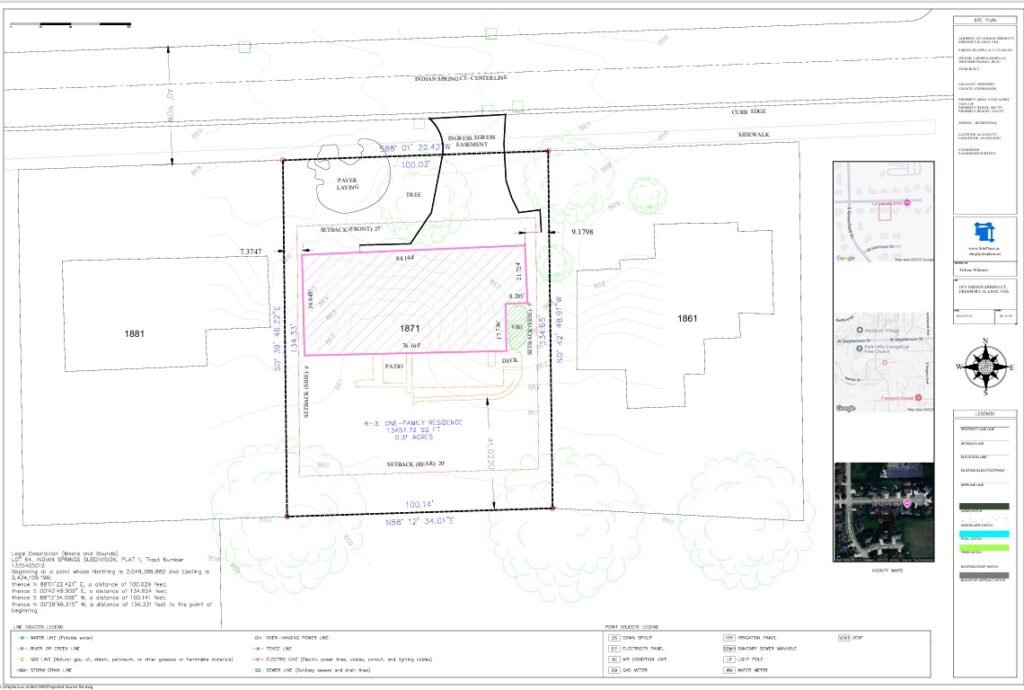
The building department didn't reject your garage project. They rejected the plan that was supposed to describe it.
Detached garages are the most commonly permitted residential structure in the United States — and among the most consistently returned for corrections. Not because garages are complicated. Because the plans submitted for them almost always miss the same three things: setback measured to the wrong element, lot coverage math that left out the driveway, and an easement shown without an instrument reference.
Three lines. Three correction comments. Four weeks back in the queue.
Your contractor quoted you a start date based on a permit timeline that assumed a clean first submission. That timeline doesn’t survive a correction cycle.
We draft garage site plans starting from what your city’s reviewer is going to check — not from what a standard residential template includes. The setback gets measured to the eave. The lot coverage includes every square foot of hardscape on the parcel. The easement gets a book and page number from the county recorder.
$89. Ready tomorrow. Free revisions if anything comes back.
What Garage Permits Actually Require on a Site Plan
A garage permit is not a complex approval. It becomes one when the plan is incomplete.
Every building department reviewing a garage permit is checking the same fundamental questions: Does the proposed structure clear the required setbacks from all property lines? Does the combined lot coverage stay within the zoning district’s maximum? Are there any easements on the parcel the structure can’t encroach on? Is the driveway access shown with correct width and geometry?
Those questions have straightforward answers on a well-drafted plan. The problem is that most plans submitted for garage permits don’t answer all of them — and the ones they miss are the ones that generate correction comments.
Setbacks for detached garages are not always the same as for the primary structure. Most zoning codes have a separate setback standard for accessory structures — typically a reduced rear and side yard minimum that allows garages to sit closer to property lines than the house can. But “reduced” doesn’t mean “none,” and the measurement still goes to the furthest projection of the structure. A 5-foot rear setback measured to the foundation when the eave overhangs by 18 inches is a plan that comes back.
Lot coverage catches garage permits more often than setbacks do. The homeowner knows the garage footprint. What they don’t calculate is the existing house, the existing driveway, the patio, the front walkway, and the shed — all of which count toward the lot coverage maximum in most jurisdictions. Adding a 600-square-foot garage on a lot that’s already at 38% coverage in a district with a 40% maximum produces a correction comment, not a permit.
Easements are invisible until they’re not. Utility easements running along the rear property line are standard in most residential subdivisions. A detached garage proposed in that easement — or within the setback distance from it — triggers a comment that can’t be resolved with a revision. It requires moving the structure. Finding the easement before you design the garage location is the difference between a plan that passes and a project that gets redesigned after submission.
What Garage Permit Correction Letters Actually Say
These are the specific comments that appear on residential garage permit applications across US building departments:
“Setback dimensions shown to foundation. Measurement required to furthest projection of structure including eave overhang. Resubmit with corrected dimensions.”
We measure to the eave — or to whichever projection extends furthest — because that’s what every jurisdiction requires and what every template plan gets wrong.
“Lot coverage calculation incomplete. Existing driveway, patio, and walkway areas not included. Maximum lot coverage for this zoning district is 40%. Resubmit with complete impervious surface tally.”
We calculate every hardscape element on the parcel — not just the proposed structure. Existing plus proposed, expressed as a percentage of total lot area.
“Utility easement shown without recorded instrument reference. Book and page number from county recorder required. Easement location must be verified against recorded document.”
We pull easement references from county recorder records. “Utility easement per plat” with a book and page citation passes. “Utility easement” alone does not.
“Driveway access not shown. Minimum driveway width and turning geometry required for detached garage with vehicular access.”
We show driveway width, access point from the street, and turning geometry where required. Reviewers in cities with minimum access standards flag this on plans that omit it.
“Proposed garage encroaches into 10-foot drainage easement along rear property line. Structure must clear easement boundaries. Resubmit with revised footprint location.”
This comment ends a project until the footprint moves. We identify easements before the plan is drawn — not after submission.
“Accessory structure height not noted. Maximum height for detached accessory structures in this district is 15 feet. Height verification required.”
We add height notation to every garage plan and verify it against the accessory structure height limit for your zoning district.
Every plan we deliver includes all of the above, plus the city-specific items your jurisdiction requires.
What Every Garage Site Plan We Deliver Includes
| Plan Element | Why It Appears on Every Sheet |
|---|---|
| Property lines from recorded plat dimensions | Legal boundary dimensions, not GIS approximations — reviewers compare against recorded documents |
| Existing primary structure footprint | Required for lot coverage calculation and setback reference |
| Proposed garage footprint with dimensions | Scaled accurately; dimensions shown on all sides |
| Setbacks to furthest projection from all property lines | Measured to eave, overhang, or furthest element — labeled for each boundary |
| Lot coverage calculation — all hardscape | House + garage + driveway + patio + walkways + accessory structures = total impervious, expressed as % of lot |
| Easements with recorded instrument references | Book and page from county recorder; easement width and location shown |
| Driveway access geometry | Width, access point, and turning radius where required by local code |
| Accessory structure height notation | Verified against zoning district maximum for accessory structures |
| Utility connection points | Electric service shown; water/sewer noted if applicable to the structure |
| North arrow, engineering scale, legal description | Required on every permit submittal — missing any produces a rejection before review begins |
| City-specific notes | Flood zone, tree protection, historic overlay, or other jurisdiction-specific requirements added per parcel |
Attached vs. Detached Garage — What Changes on the Plan
Detached garage: Treated as an accessory structure. Setback standards are usually more permissive than for the primary structure — but still regulated. Lot coverage impact is calculated independently. Height limit applies separately from the house. Most correction comments on detached garage permits come from setback measurement errors, incomplete lot coverage math, or easement conflicts.
Attached garage: Treated as part of the primary structure. The primary structure’s setback standards apply — typically more restrictive than accessory structure standards. The combined footprint of house plus garage is used for lot coverage. In some jurisdictions, an attached garage addition triggers a zoning review of the entire structure, not just the addition. We identify which standard applies to your parcel before drafting.
Garage conversion to living space: If you’re converting an existing garage to a bedroom, office, or ADU, the site plan documents the conversion — not a new structure. The focus shifts to lot coverage changes from any exterior modification and whether the conversion triggers an accessory dwelling unit review under the local ordinance. Some cities require a separate ADU permit for this conversion type. We flag it if that’s the case for your jurisdiction.
Affordable Pricing
| Plan | Price | Best For |
|---|---|---|
| Basic – $89 | Standard detached garage on straightforward residential lot | Property lines, existing and proposed footprints, setbacks to eave, lot coverage calculation, easements, driveway, north arrow, scale |
| Enhanced – $149 | Garage with flood zone exposure, tree coverage, or utility complexity | Adds FEMA flood data, tree protection notation, utility connections, riparian buffer if applicable |
| Premium – $249+ | Attached garage additions, complex lots, garage-to-ADU conversions | Full compliance verification, ADU ordinance check if conversion involved, grading notes, historic overlay notation |
✅ Free revisions on any correction comments
✅ 24-hour turnaround on most garage permit projects
✅ All 50 states — parcel-specific research on every order
✅ No survey required for the majority of garage permits
Garage Permits Across Different Cities — What Changes
Sacramento, CA — Accessory structure setbacks: 5 feet rear, 5 feet side in most residential districts. Eave measurement required. Lot coverage includes all impervious surfaces. Tree protection ordinance applies if protected oak or other species falls within disturbance area.
Jacksonville, FL — Accessory structure rear setback 5 feet; side 5 feet minimum. Lot coverage tracked against RLD-60 or applicable residential district maximum. Flood zone and BFE notation required for parcels in AE zones. Grand tree location required if 24″+ DBH within disturbance area.
Raleigh, NC — Accessory structure setbacks vary by zoning district. Impervious surface must be itemized — not a combined figure. Pre-May 2001 lots fall under grandfathered stormwater framework. Neuse River buffer applies if USGS blueline stream present on parcel.
Austin, TX — Impervious cover limit tied to watershed zone; a garage addition on a lot already near its impervious cap may trigger additional stormwater review. Heritage tree (19″+ DBH) review required if tree falls within construction zone.
Dallas, TX — Lot coverage and impervious surface tracked separately. Floodplain notation required near Trinity River tributaries. Easements pulled from Dallas County deed records.
Phoenix, AZ — Accessory structure setbacks in R1-6 and R1-8 districts: 6 feet rear, 3 feet side. Garage height cap typically 14 feet. Lot coverage includes all structures, driveways, and paved surfaces.
Other Project Types We Cover
A garage is one of the most common residential permits. Here’s what else we draft site plans for:
ADU Site Plans | Pool Site Plans | Home Addition Site Plans | Shed Site Plans | Deck Site Plans | Fence Site Plans
And the city pages where we’ve documented specific local requirements:
Sacramento | Jacksonville | Raleigh | Austin | Dallas | Fort Worth | San Antonio
FAQs — Garage Permit Site Plans
In virtually every US jurisdiction, yes. Any structure requiring a building permit — and a detached garage almost always does — requires a site plan showing its location on the property relative to boundaries, setbacks, and existing improvements. The size of the garage doesn’t change that requirement. A 12×20 one-car garage needs the same site plan documentation as a 3-car structure.
Yes. All setback distances — front, rear, and both sides — need to appear on the plan even when the proposed structure is at the rear of the lot. Reviewers use the full setback picture to verify compliance and to check that no other dimension has been impacted by the proposed addition. Front yard setback is also used to confirm the primary structure hasn’t changed.
Significantly. Most utility easements prohibit permanent structures within their boundaries. A garage proposed within the easement area — even partially — will come back with a comment requiring the footprint to move. The typical rear utility easement runs 10 to 15 feet from the rear property line. We locate the easement from county recorder records before the garage footprint is placed on the plan.
It varies. Most residential zoning districts in US cities cap total lot coverage — all structures plus all hardscape — between 35% and 50% of the lot area. The garage footprint adds to that total. Whether your lot has room for the proposed garage depends on what’s already there. We calculate the current coverage and the proposed total before finalizing the plan, so there are no surprises at submission.
Yes, but that configuration typically triggers ADU review in addition to the standard garage permit. The combined structure height, the habitable space above the garage, and the accessory dwelling standards for your city all need to be addressed on the plan. That’s our Premium tier — we verify the garage-top ADU rules for your jurisdiction before drafting begins.
Yes. Send us the correction letter from the building department and the plan that was returned. We revise to address every specific comment. If the original plan came from us, there’s no charge. If you’re coming to us after another service, we’ll quote a flat revision rate — typically the Basic plan fee for straightforward corrections.
Served Nationwide. Locally Researched. Every Time.
Every city has its own checklist. Every plan we draft is built around it.